
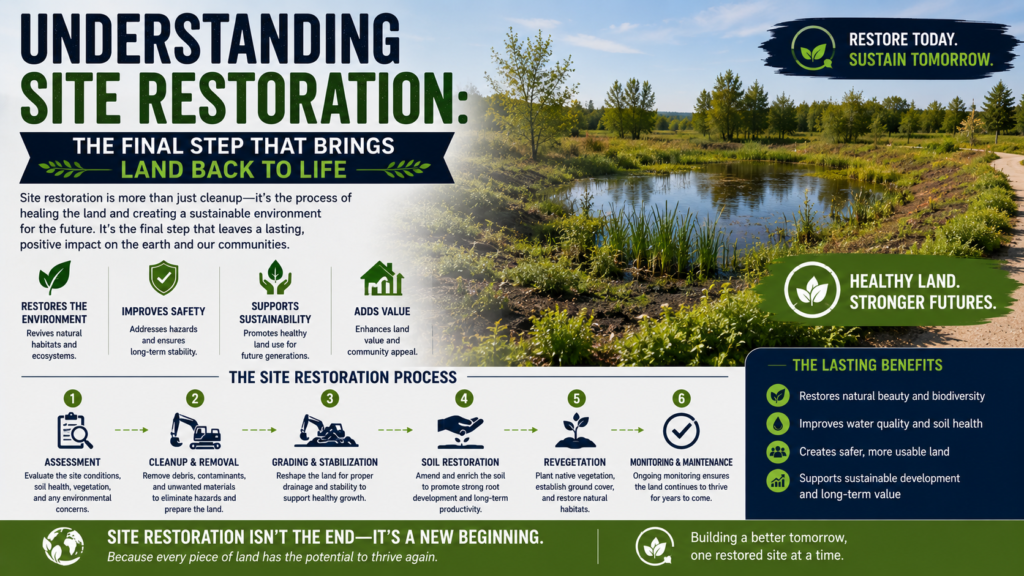
Construction, excavation, demolition, and utility work all leave a mark on the land. Whether it’s a small residential project or a sprawling commercial development, the ground rarely looks the same once heavy equipment rolls out. That’s where site restoration comes in. It’s the often-overlooked final phase of any project, and yet it’s the step that determines whether the property is safe, usable, attractive, and compliant with local environmental rules. For property owners, contractors, and developers across southeast Michigan, getting this step right matters more than most people realize.
In this article, we’ll walk through what Site Restoration Detroit actually involves, why it’s necessary, the methods used, and how the process protects both the land and the people who rely on it.
What Is Site Restoration?
Site restoration is the process of returning a piece of disturbed land to a stable, safe, and usable condition once the primary work, whether construction, demolition, mining, or utility installation, has been completed. The goal is to bring the site as close to its pre-disturbance state as possible, or in some cases, to leave it in even better condition than it was found.
This isn’t just about aesthetics. Disturbed land can have lasting impacts on the surrounding environment if left untreated. Loose soil erodes, water runoff increases, vegetation struggles to grow back, and entire ecosystems can be thrown off balance. Restoration corrects those issues systematically.
Why Site Restoration Matters
People often assume that once construction is done, the job is finished. In reality, leaving a disturbed site unfinished can create a chain of problems. Erosion can wash away topsoil and clog stormwater systems. Bare ground promotes invasive weeds. Uneven surfaces become tripping hazards or drainage nightmares. And in many cases, federal, state, and local regulations require restoration as part of the original permit conditions.
There are several core reasons restoration is essential:
Environmental protection. Disturbed soil is prone to erosion, which can carry sediment and contaminants into nearby water bodies. Restoration practices like reseeding, mulching, and installing erosion controls keep that material in place.
Public safety. Open pits, unstable slopes, leftover debris, and exposed materials can be dangerous. Proper restoration eliminates these hazards before the public regains access to the area.
Regulatory compliance. Municipalities, environmental agencies, and permitting bodies typically require restoration to specific standards. Non-compliance can result in fines, project delays, and legal issues.
Property value and aesthetics. A restored site looks finished. It signals professionalism, supports neighborhood character, and protects long-term property value.
Ecological recovery. Native vegetation, healthy soil, and balanced drainage all support local wildlife and biodiversity. Restoration helps re-establish those natural systems.
Common Activities Included in Site Restoration
Although every site is different, most restoration projects share a similar set of core activities. Understanding these gives property owners and project managers a clear idea of what to expect once heavy work wraps up.
Debris removal. Before anything else, leftover construction materials, broken concrete, wood, packaging, and other waste must be cleared from the site. Recycling and proper disposal are critical in this phase.
Site grading and contouring. Heavy equipment leaves uneven surfaces. Grading reshapes the land to ensure proper drainage, prevent water pooling, and meet engineering specifications. Original topography is referenced wherever possible.
Topsoil replacement. During excavation, topsoil is often stripped and stockpiled. Once the site is graded, this nutrient-rich soil is spread back across the area to support plant growth.
Seeding, sodding, or hydroseeding. Vegetation is the most effective long-term tool against erosion. Hydroseeding, which sprays a mixture of seed, mulch, water, and nutrients, has become especially popular because it covers large areas quickly and germinates evenly.
Erosion control. Silt fences, straw mats, hydro-mulch, and biodegradable blankets are often installed to hold soil in place while vegetation takes root.
Drainage restoration. Excavation or construction frequently affects natural water flow. Drainage systems are inspected, restored, or upgraded as part of final restoration.
Surface cleanup and detailing. Final touches, such as smoothing surfaces, removing tire ruts, and tidying up around fixed structures, give the property a polished, finished appearance.
The Step-by-Step Process
A typical restoration project begins with a comprehensive assessment. Contractors evaluate the condition of the land, document what materials remain, identify damaged areas, and check for hazards. From there, a restoration plan is developed that specifies the work needed, the materials required, and the regulatory benchmarks that must be met.
Once the plan is approved, the actual work proceeds in stages. Cleanup comes first to clear the area of debris. Then backfilling and grading take place, followed by topsoil placement and vegetation. Erosion control measures are installed alongside or immediately after seeding. Finally, the site is inspected to ensure stability, drainage performance, and overall quality before it is officially handed back.
Common Questions About Site Restoration
Is site restoration different from renovation? Yes. Renovation focuses on improving or modernizing a structure. Restoration focuses on returning land to a safe, stable, pre-disturbance condition.
How long does restoration take? Most restoration is completed within the first year after construction, though grass establishment, slope stabilization, and seasonal weather can extend the timeline. Larger or more disturbed sites may require longer monitoring periods.
Is restoration required by law? In many cases, yes. Permits issued for construction, utility work, or land clearing often include restoration requirements. Local ordinances may also dictate standards.
Can I do site restoration myself? Minor cleanup is sometimes possible for small property owners, but most restoration work requires professional equipment, knowledge of grading and drainage, and familiarity with environmental regulations.
Why Detroit Properties Often Need Restoration
Detroit and the surrounding communities have a rich mix of residential, industrial, and commercial properties. Many sites involve aging infrastructure, post-demolition lots, utility upgrades, or new construction. Each of these activities disturbs the land in ways that require thoughtful restoration. Professional Site Restoration Detroit services help bring these properties back to a usable, attractive, and environmentally responsible state, supporting Detroit’s ongoing growth and revitalization.
The Bigger Picture
At its heart, site restoration is about responsibility. It’s about recognizing that disturbing land carries an obligation to repair it. Done well, restoration protects soil, water, wildlife, neighborhoods, and the long-term value of the property itself. Done poorly, or skipped altogether, it creates lasting problems that ripple far beyond the boundaries of a single lot.
Whether the project is a major commercial build, a residential teardown, or a routine utility installation, restoration is the step that closes the chapter on a clean, professional note. It’s the final piece of the puzzle that turns a construction zone back into part of the surrounding community.
For property owners in southeast Michigan thinking about their next development or land-clearing project, keeping site restoration in mind from the very beginning leads to smoother projects, fewer surprises, and a much better final result.