
Complete Home Solar Kits in Pakistan: What to Buy in 2026
Buying a solar system used to mean juggling ten different vendors for panels, an inverter, cables, and mounts. In 2026, the smarter route is a complete home solar kit, one bundle engineered to work together out of the box. If you are searching for the best solar company in Pakistan to supply that kit, this guide walks you through exactly what a good bundle contains and how to size it for your home.
Electricity tariffs keep climbing, and load-shedding has not disappeared. A properly matched solar kit gives you predictable bills and backup power during outages. The trick is choosing components that are rated for Pakistan’s heat, dust, and voltage swings, not the cheapest box on the shelf.
Why a Complete Solar Kit Beats Buying Piecemeal
When you assemble parts from different suppliers, you carry the risk of mismatched voltages, incompatible connectors, and warranty gaps. A curated kit removes that guesswork.
Everything is sized to a target load, so the inverter can actually drive the panels, and the battery bank matches the charge controller. That single-vendor accountability matters when something needs replacing.
- Guaranteed compatibility between panels, inverter, and battery voltage.
- One warranty contact instead of chasing multiple brands.
- Correct cabling and protection included, not sold as an afterthought.
- Faster installation because the installer knows the exact bill of materials.
For homeowners who want a done-for-you approach, working with genuinely reliable local experts shortens the whole process from weeks to days.
What Sits Inside a Standard Home Kit?
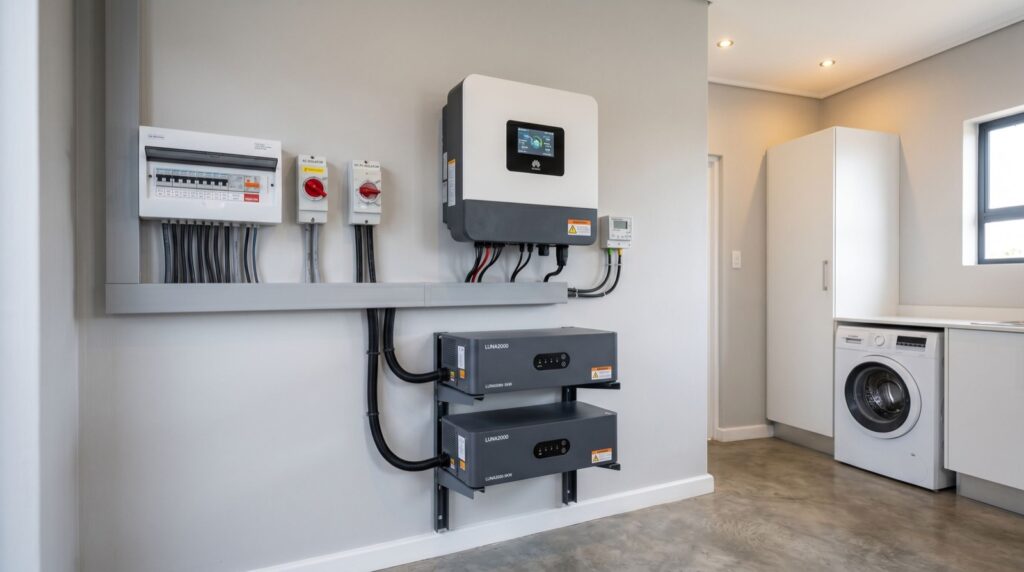
A typical 5kW residential kit for a Pakistani household includes the components below. Treat this as your checklist before you pay.
| Component | Typical Spec (5kW Home) | Role |
|---|---|---|
| Solar panels | 9–10 × 550W N-type mono | Generate DC power |
| Hybrid inverter | 5kW–6kW, 48V | Convert DC to AC, manage battery |
| Battery bank | 1–2 × 5kWh lithium (optional) | Store energy for night and outages |
| Mounting structure | Galvanised or aluminium rails | Secure panels to the roof |
| DC/AC cables + MC4 | 4–6 mm², UV-rated | Safe, low-loss wiring |
| Protection | DC breakers, SPD, fuses | Surge and fault safety |
How to Choose the Right Inverter for Your Kit
The inverter is the brain of the system, so choose it first. A hybrid unit lets you run on solar, charge a battery, and fall back to the grid automatically, which is ideal for Pakistan’s mixed supply.
Look for pure sine-wave output, a wide MPPT voltage range, and a surge rating that covers motor loads like water pumps and refrigerators. If you plan to add batteries later, a quality hybrid inverter in Pakistan future-proofs the whole kit so you are not forced to replace it.
On-Grid, Off-Grid, or Hybrid?
Your choice shapes every other part of the kit.
- On-grid: cheapest, exports surplus via net metering, but no backup during outages.
- Off-grid: full independence with batteries, higher cost, best for remote areas.
- Hybrid: the middle path, batteries plus grid, so you keep power when the grid fails.
Most urban homes in Lahore, Karachi, and Islamabad choose hybrid because it balances savings with outage protection.
Sizing a Kit to Your Monthly Load
Pull out your last three electricity bills and note your average monthly units (kWh). A rough rule for Pakistan’s sunshine is that every 1kW of panels produces roughly 4 units per day.
So a 5kW system yields around 20 units daily, or about 600 units a month. If your bill shows 550–650 units, a 5kW kit is a strong match. Heavier users with air conditioning often move to 8kW–10kW bundles.
Global adoption backs this shift. The International Renewable Energy Agency (IRENA) reports that solar remains the fastest-growing power source worldwide, driven largely by falling module prices, a trend Pakistani buyers feel directly at the checkout.
Practical Tip From the Field
Always oversize your panel array by 10–20% relative to the inverter rating. Panels lose output in extreme heat and dust, and a slight oversize keeps the inverter working near capacity through summer. This single adjustment is the difference between hitting your savings target and falling short every July.
Installation and What Happens After Purchase
A clean installation protects your investment. The crew should survey your roof orientation, shading, and structure before mounting anything.
- Panels tilted to face south for maximum annual yield.
- Rails anchored to withstand monsoon wind loads.
- Cable runs kept short to reduce voltage drop.
- Earthing and surge protection tested before commissioning.
After commissioning, ask for a monitoring app so you can watch daily production and spot faults early. Reputable suppliers also register your net-metering application if you go on-grid.
Frequently Asked Questions
How much does a complete home solar kit cost in Pakistan in 2026?
A quality 5kW hybrid kit without batteries typically ranges widely depending on panel brand and inverter tier. Adding a lithium battery bank raises the price but delivers full outage backup. Always compare kits by warranty and component brand, not just headline price.
Can I add batteries to my kit later?
Yes, as long as you buy a hybrid inverter from the start. A hybrid unit reserves a battery port and charge logic, so you can expand storage when your budget allows without replacing core equipment.
How long does installation take?
A standard rooftop kit for a home is usually installed in one to three days, depending on roof complexity and whether battery wiring is included. Net-metering approval can take longer as it involves your distribution company.
Will a solar kit run my air conditioner?
A correctly sized 5kW–8kW kit with a hybrid inverter can run one or two inverter ACs during the day on solar. Running them at night requires a sufficient battery bank, so factor that into your sizing.
Conclusion
A complete home solar kit takes the confusion out of going solar. Match the inverter to your load, size the array with a little headroom, and insist on genuine components with a single warranty. Do that, and your rooftop becomes a reliable power plant for the next two decades.
Ready to buy a bundle that is engineered for Pakistani homes and backed by proper after-sales support? Compare complete kits today and lock in lower bills before the next tariff hike.